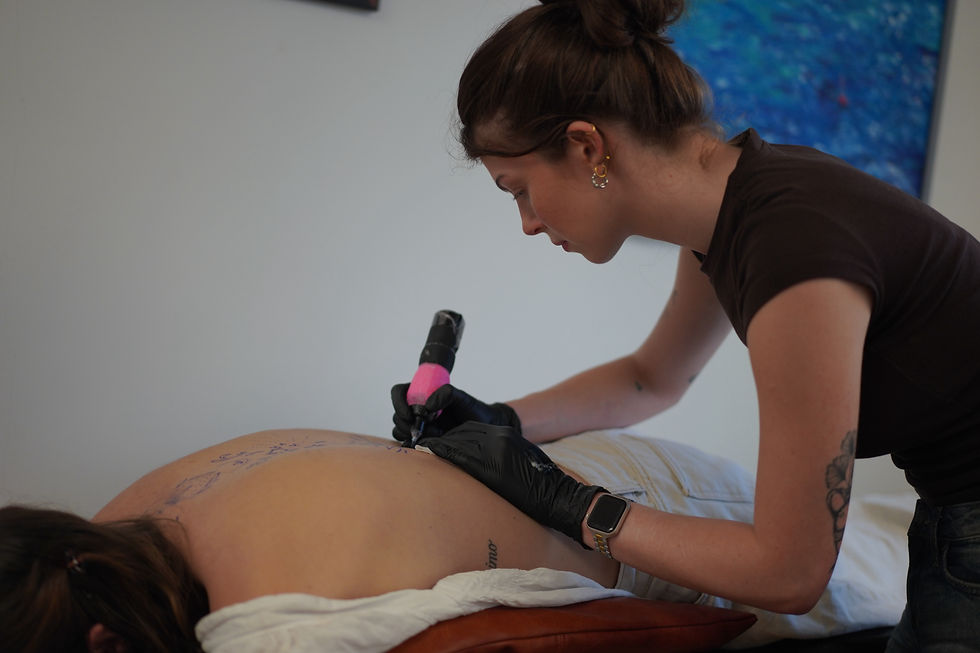
Are tattoos still unprofessional? Not anymore — Here’s why that’s outdated
- Aug 1, 2025
- 3 min read
Updated: Sep 28, 2025
Table of contents:

Where the tattoo stigma came from
It’s no secret that tattoos were once tied to rebellion, criminality, or fringe groups.
For decades, especially in the UK, tattoos were seen as:
• Anti-establishment
• Unruly
• Associated with gangs, prisoners, or sailors
But here’s the truth: that image hasn’t held up in years — yet the assumption lingers in some circles.
We’re here to clear that up.
What’s changed in the modern workplace
From tech startups to NHS workers, tattoos are now commonplace in both client-facing and professional settings.
In fact, in recent surveys:
• Over 35% of adults under 40 in the UK have tattoos
• More than 75% of employers say visible tattoos do not impact their hiring decisions
• Some industries even view tattoos as a form of personal branding or self-expression
Tattoos are no longer a deal-breaker — they’re conversation starters.
Industries that embrace tattoos today
Here’s where tattoos are widely accepted (and even appreciated):
• Creative fields (design, photography, marketing)
• Tech companies (developers, UX/UI, cybersecurity)
• Hospitality & food industry (bartenders, chefs, baristas)
• Health & wellness (fitness trainers, yoga instructors, therapists)
• Trades (plumbers, electricians, mechanics, builders)
• Personal services (tattooists, hairdressers, beauty professionals)
Even more traditional sectors — like education and healthcare — are softening policies, especially when tattoos are tasteful and not offensive.
What employers actually care about now
Tattoos don’t affect your:
• Work ethic
• Customer service
• Professionalism
• Attention to detail
• Reliability
Most employers today care about your results, not your ink.
As long as your tattoos don’t display hate speech, nudity, or violence, you’re likely good to go in most settings.
How to choose placement if you’re concerned
Still worried about perception? That’s valid — and manageable.
Here’s how to play it smart:
• Opt for easily coverable areas: upper arm, back, ribs, thigh
• Avoid hands, neck, or face tattoos if you’re in a more traditional career
• Start with personal pieces that mean something — they’ll feel more “worth it” regardless of visibility
And if you’re in a job where image matters — consider waiting until your role is more secure before going bold.
Confidence vs. caution: What to consider
Here’s the truth:
👉 A tattoo won’t stop you from getting hired.
👉 But the confidence you carry with it can help you stand out.
If you’re constantly hiding a tattoo or second-guessing it, that discomfort might show more than the ink itself ever would.
So ask yourself:
• Am I proud of this tattoo?
• Does it reflect who I am?
• Can I explain it with confidence if asked?
If the answer’s “yes,” you’re ready.
FAQs
Q: Should I ask my employer about tattoos before getting one?
A: If you’re concerned, yes — especially if it’s visible. Many employers are open-minded and will appreciate your professionalism in asking.
Q: Can I be fired for having a tattoo?
A: In most UK cases, not unless the tattoo breaches a specific dress code policy or is deemed offensive. Always check your contract if unsure.
Q: Are there industries where tattoos are still frowned upon?
A: Some sectors like finance, law, or politics can still carry more conservative views — but even these are shifting, especially in urban areas.
Final word?
Tattoos aren’t a sign of rebellion anymore — they’re a form of personal truth.
And the truth is, professionalism isn’t about appearances — it’s about how you show up, how you treat others, and the work you deliver.
So ink up — and show up.