The Fascinating Science Behind Tattoos: How Ink Stays in Your Skin Forever
- Nov 1, 2025
- 3 min read
Updated: Nov 11, 2025
Understanding the Tattoo Process
When I first thought about getting a tattoo, I couldn’t stop asking myself: How does ink stay in the skin forever? Surely it should just fade away like a pen mark, right? The truth is stranger and more fascinating than I expected.
Here’s a look at how tattoos actually work — the science behind the ink, the skin, and why they remain visible for life.
Table of Contents
The Skin’s Layers Explained
What Happens During Tattooing
Why Tattoos Stay Visible
The Role of the Immune System
What Makes Tattoos Fade Over Time
Conclusion
FAQs
The Skin’s Layers Explained
Our skin has three main layers:
Epidermis (the outer layer that constantly sheds)
Dermis (the middle layer where tattoos live)
Hypodermis (the deeper fat layer)
Tattoo ink needs to be deposited into the dermis because that’s the layer that doesn’t shed — keeping the ink locked in place.
What Happens During Tattooing
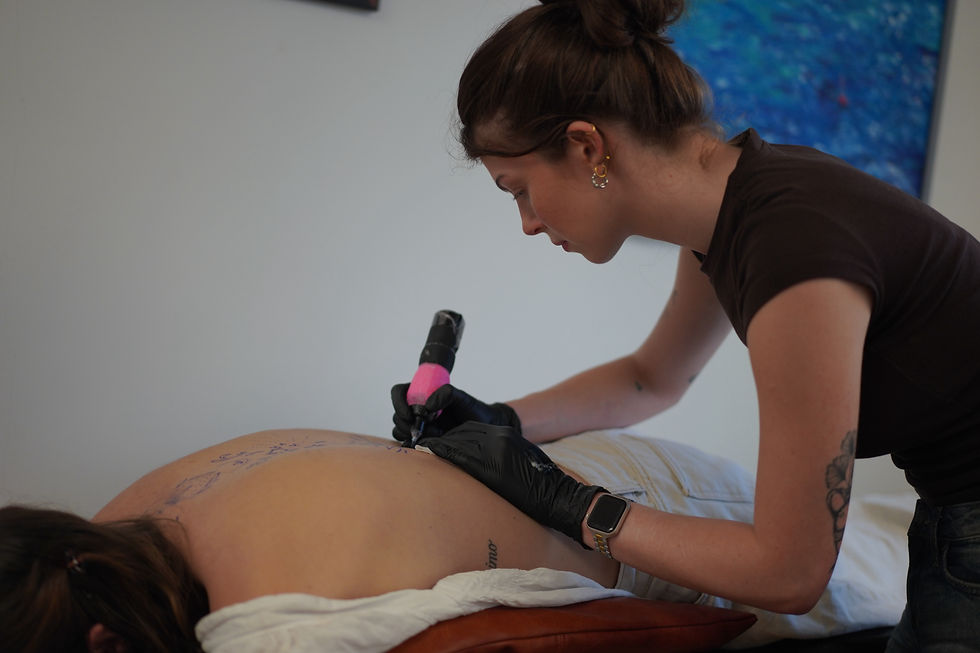
A tattoo machine uses needles that puncture the skin rapidly, carrying tiny drops of ink into the dermis. This creates a controlled injury that your body begins to heal immediately. The process is quick, but it’s also a bit intense. You might feel a sting, but many find it exhilarating!
Why Tattoos Stay Visible
Unlike a surface scratch or marker pen, tattoo pigment particles are too large for your skin to shed. They stay suspended in the dermis, visible beneath the top layer of skin. This is why your tattoo can look just as vibrant years later, provided you take care of it.
The Role of the Immune System
Here’s the fascinating part: your immune system actually tries to get rid of the ink. Cells called macrophages “eat” the pigment, but because the particles are too big, they remain trapped — keeping the tattoo visible. It’s like your body is in a constant battle, but the ink wins every time!
What Makes Tattoos Fade Over Time
Even though tattoos are permanent, they do change. Sunlight, skin cell turnover, and friction can make tattoos fade or blur. That’s why aftercare and touch-ups are so important if you want your ink to stay sharp. Regular moisturising and using sunscreen can help maintain the vibrancy of your tattoo.
The Importance of Tattoo Aftercare
After getting a tattoo, it’s crucial to follow proper aftercare. This not only helps the healing process but also preserves the quality of your tattoo. Here are some tips:
Keep it clean: Gently wash your tattoo with mild soap and water.
Moisturise: Apply a fragrance-free lotion to keep the skin hydrated.
Avoid sun exposure: Protect your tattoo from direct sunlight to prevent fading.
Don’t pick: Let any scabs fall off naturally to avoid damaging the tattoo.
Following these steps can make a significant difference in how your tattoo ages.
Conclusion
I used to think tattoos were almost magical — ink just somehow stayed under the skin. Learning the science made me appreciate them even more. Tattoos last because of a delicate balance between art, biology, and healing.
In the end, they’re not just pictures on skin — they’re living art, carried by your body’s own systems, woven into who you are. So, if you’re considering getting a tattoo, think about the story it tells and how it becomes a part of your journey.
FAQs
Q: Do tattoos ever disappear completely?
A: No, though they can fade. Only laser removal can significantly reduce or erase a tattoo.
Q: Why do some tattoos look blurry after years?
A: Ink particles can spread slightly in the dermis, especially if placed too deeply or exposed to friction and sun.
Q: Can tattoos harm your immune system?
A: No. Your immune system works to contain the ink, which is why tattoos stay put.
Q: How can I ensure my tattoo looks great for years?
A: Regular moisturising, avoiding sun exposure, and getting touch-ups when necessary will keep your tattoo looking fresh.
Q: What should I do if my tattoo starts to fade?
A: Consider a touch-up session with your tattoo artist to restore its vibrancy. They can help you decide the best course of action.
Q: Is it normal for tattoos to change over time?
A: Yes, it’s completely normal. Factors like age, sun exposure, and skin changes can affect how your tattoo looks.
Q: Can I get a tattoo removed?
A: Yes, laser removal is an option, but it can be costly and may require multiple sessions for complete removal.
Remember, tattoos are a commitment, but they’re also a beautiful form of self-expression. Embrace the journey, and enjoy your ink!