Laser Tattoo Removal Myths vs Facts — What You Really Need to Know
⸻
Introduction
If you’ve ever looked into tattoo removal online, you’ve probably seen some horror stories — burns, blisters, and bold claims that “lasers don’t really work.”
The truth? Most of those stories come from cheap, unregulated operators using poor-quality machines and cutting corners on safety.
At our tattoo shop, we’ve seen firsthand the difference professional technology makes.
We use Lynton Lasers, one of the leading medical-grade systems in Europe, designed for safe, effective pigment removal without damaging healthy skin.
Let’s clear the air and separate fact from fiction — because when done properly, laser tattoo removal can be one of the safest and most effective procedures in aesthetic medicine.
⸻
Table of Contents

**Myth #1 — “Laser Tattoo Removal Always Leaves Scars”
✅ Fact: Scarring usually happens only when unqualified people perform the treatment or when poor aftercare is followed.
Modern Q-switched and Nd:YAG lasers (like Lynton) target ink particles without cutting or burning the skin.
If the area is treated correctly and allowed to heal naturally, your skin should return to normal — or better.
⸻
**Myth #2 — “All Lasers Are the Same”
✅ Fact: The quality of your laser determines the quality of your results.
Many cheap or imported machines found online use uneven light dispersion, creating hot spots that burn or scar the skin.
Medical-grade lasers deliver a uniform beam, meaning energy spreads evenly and safely across the tattoo, breaking pigment precisely without trauma.
That’s why reputable clinics invest in certified systems like Lynton — they’re built for precision, reliability, and consistency.
⸻
**Myth #3 — “It Can Be Done in One Session”
✅ Fact: Complete removal takes time — and that’s a good thing.
Your tattoo ink sits deep in the dermis, and your body can only process a certain amount of pigment safely at a time.
Depending on the colour, density, and placement, most removals need 6–10 sessions spaced 6–8 weeks apart.
Trying to rush the process or using stronger settings than your skin can handle leads to burns, pigment damage, or uneven fading.
⸻
**Myth #4 — “It’s Too Painful to Handle”
✅ Fact: Discomfort is minimal with modern cooling systems.
Laser removal feels like quick, light snaps on the skin — far milder than what older lasers caused.
With air-cooling technology and professional aftercare, most clients describe it as manageable and quick, lasting only a few minutes.
Pain also depends on the tattoo’s location — just like getting tattooed — but the procedure is completely tolerable for the majority of clients.
⸻
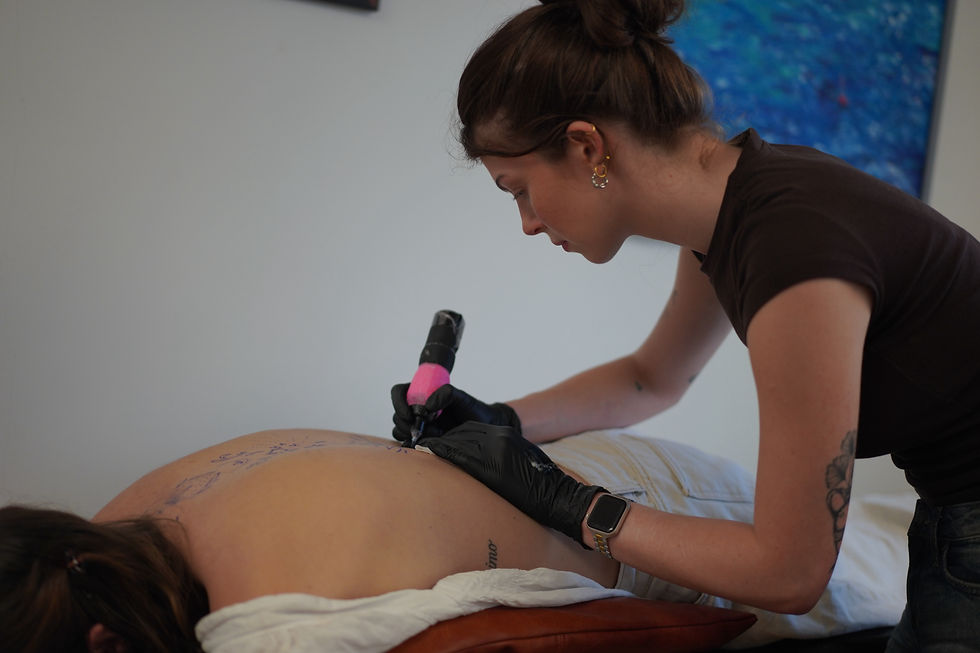
**Myth #5 — “Tattoo Artists Can Do Laser Removal Too”
✅ Fact: Laser removal and tattooing are completely different disciplines.
A tattoo artist’s job is to add pigment into the skin; a laser professional’s job is to remove it safely, without damaging the surrounding tissue.
Both require deep, ongoing education — but in very different sciences.
A genuine laser specialist spends their time studying laser physics, wavelengths, and skin response — just as a professional tattoo artist spends years mastering technique and pigment behaviour.
If one person claims to “do both,” ask yourself: when do they find time to master either properly?
⸻
The Truth About Safe, Professional Tattoo Removal
Here’s the bottom line:
Laser tattoo removal done by trained professionals, using proper medical-grade equipment, is safe, predictable, and effective.
But in the wrong hands, it’s one of the most dangerous treatments you can get.
Never trust unverified operators, home setups, or unbranded lasers — they don’t just risk your results; they risk your health.
Your skin deserves the same respect and expertise that went into the tattoo itself.
Do your research, ask questions, and always choose professionals who can prove their qualifications and technology.
⸻
Conclusion
When done right, laser tattoo removal is not a horror story — it’s a second chance.
It’s science, skill, and patience working together to restore your skin safely.
Don’t believe every myth you read online.
Trust the process, trust the professionals, and remember — it’s not the laser that matters most, it’s the hands that guide it.
⸻
FAQs
Q: How do I know if a clinic is using a real Lynton laser?
A: Ask to see certification or look up the model on Lynton Lasers UK.
Q: Can cheap lasers really cause burns?
A: Yes — uneven energy pulses and poor calibration are the most common causes of burns and scarring.
Q: Is it better to fade the tattoo for a cover-up instead of full removal?
A: Absolutely. Fading to around 50% makes cover-ups cleaner, brighter, and easier to design.