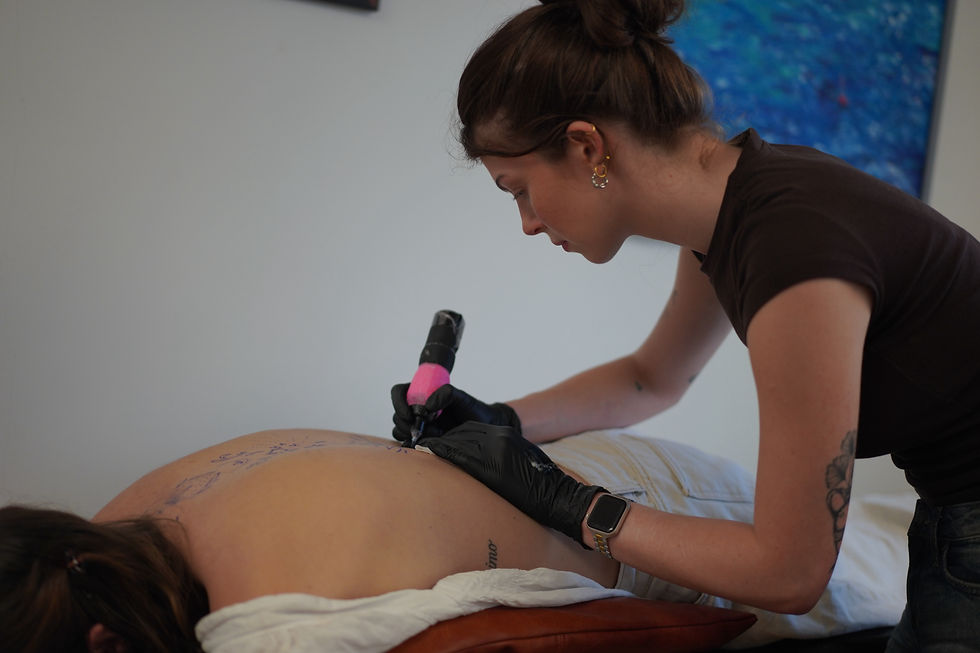
Why tattoo removal should always be done by a healthcare professional
Updated: Sep 28, 2025

Introduction
When I first thought about tattoo removal, I assumed it was like getting a tattoo — walk in, book an appointment, and the result depends mostly on the machine. But the more I learned, the clearer it became: the person holding the laser matters just as much, if not more, than the machine itself.
Here’s the shocking part: tattoo removal in the UK isn’t properly regulated. Almost anyone can buy a cheap laser, set up shop, and start firing it at people’s skin. No medical training. No real understanding of the risks. No safety net if something goes wrong.
That’s why we made a very deliberate choice. At our tattoo shop in Saltash near Plymouth, we only let a nurse operate our Lynton laser. Because when it comes to your skin, safety has to come first.
Table of Contents
1. The hidden risks of tattoo removal
Laser removal sounds simple — zap the ink, watch it fade. But in reality, it’s a medical-grade procedure with risks if done poorly.
We’ve seen cases where people left with burns, pigment loss, or permanent scarring because someone unqualified was behind the machine. Without the right knowledge of how skin reacts, or how different health conditions affect healing, it’s easy to do real damage.
2. Why UK regulation isn’t strong enough
Here’s the uncomfortable truth: tattoo removal in the UK isn’t as tightly regulated as tattooing.
Local councils oversee tattooing studios with hygiene and licensing standards. But when it comes to lasers, the rules are far looser. That gap means anyone can market themselves as a “specialist,” even if they’ve had little more than a weekend training course.
And when skin damage happens, it’s often the client left carrying the scar.
3. What makes a healthcare professional different
A nurse or healthcare-trained professional brings a level of safety that no short course can match.
Medical knowledge of skin and healing — essential for safe treatments.
Understanding of contraindications — knowing when not to treat because of conditions or medication.
First aid and emergency training — so you’re protected if something unexpected happens.
Accountability — nurses work under professional codes of ethics and care.
It’s not just about pointing a laser at ink. It’s about safeguarding the person underneath.
4. Why we only trust a nurse with our laser
That’s why we made the decision that all laser removal in our studio is nurse-led.
We use Lynton Lasers, one of the most trusted systems in Europe, but even the best machine is only as safe as the hands controlling it. With a nurse, every treatment comes with:
A consultation tailored to your health and history
Treatment that prioritises your skin and long-term safety
The reassurance of knowing you’re cared for by someone who understands more than just the machine
For us, it’s not negotiable — your skin is too important to risk.
5. What this means for you as a client
When you’re choosing tattoo removal, don’t just ask about the laser — ask who is using it.
If it’s not a healthcare professional, you’re placing your skin and your health in the hands of someone who may not know what to do if things go wrong.
Choosing a nurse-led service means peace of mind, safer healing, and results that respect your skin.
6. Final thoughts
Tattoo removal should never be treated like a casual beauty service. It’s a medical-grade treatment that needs proper medical knowledge.
Until regulations catch up, the safest choice you can make is to pick a clinic where healthcare professionals lead the way.
That’s why our laser treatments are always carried out by a nurse — because your skin deserves the same care we’d want for ourselves.
7. FAQs
Q: Why isn’t tattoo removal better regulated? Because laser treatments fall into a grey area of cosmetic vs. medical services. Oversight is still limited in many regions.
Q: Why does it matter if a nurse does the treatment? Because nurses understand skin, healing, and safety — which untrained technicians often don’t.
Q: Can unqualified operators cause damage? Yes — burns, scarring, and pigment loss are common when lasers are misused.
Q: How do I know if a clinic is safe? Ask who operates the laser, what their qualifications are, and what machine they use. If they can’t answer clearly, don’t risk it.