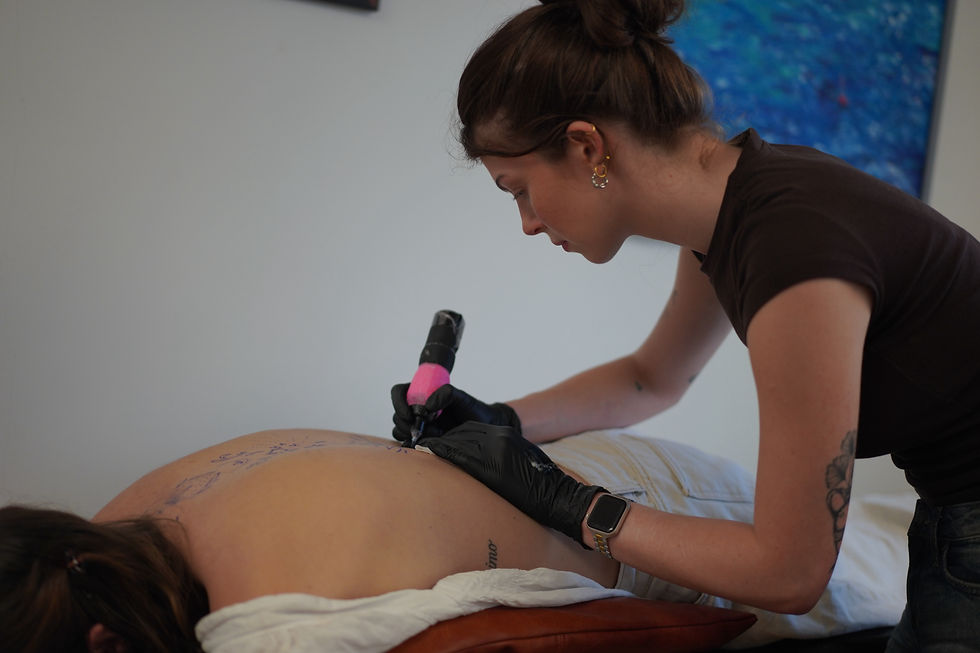
Why laser lightening creates better cover-ups
Updated: Sep 28, 2025

Introduction
I used to think a cover-up was simple: just tattoo something darker over the old design and it’s gone. But the more I learned, the more I realised that laser lightening is often the secret to a perfect cover-up.
Not full removal — just a few sessions to fade the tattoo enough for the new design to sit clearly and powerfully. Here’s why that extra step can completely change your results.
Table of Contents
1. Why lightening beats direct cover-ups
Covering dark ink with darker ink just creates a muddy mess. Laser lightening gives the artist a clearer canvas, reducing how much they need to force into the skin.
2. How laser prepares the skin for ink
By fading the existing tattoo, the laser makes space for new pigment. Instead of two tattoos competing in the same layer, the lighter one gets overpowered by the new inks once healed.
3. Why 3–4 sessions often do the job
It doesn’t take full removal. Just lightening the tattoo by a few shades is usually enough. That balance between fading and tattooing is what makes the new piece truly shine.
4. Why this leads to cleaner healing
With less ink fighting for space, the healing is smoother and the tattoo looks sharper. No blurred edges, no ghosting — just a cover-up that feels like the only tattoo you’ve ever had.
5. Final thoughts
Laser lightening isn’t about erasing your tattoo completely. It’s about giving your cover-up the best possible foundation — so your new ink looks strong, clean, and complete.
6. FAQs
Q: Do I need full removal before a cover-up?
No — lightening by a few shades is usually enough.
Q: Does it hurt more to tattoo over laser-treated skin?
Not necessarily — if done correctly, the skin heals well and tattoos just like normal.
Q: Can I skip laser and go straight to cover-up?
You can, but the results may be muddy and less effective.