Spot Dodgy Laser Tattoo Removal Technician
Introduction
If you’ve ever seen a tattoo removal gone wrong — scars, burns, or blotchy patches — you already know how dangerous cheap laser treatments can be.
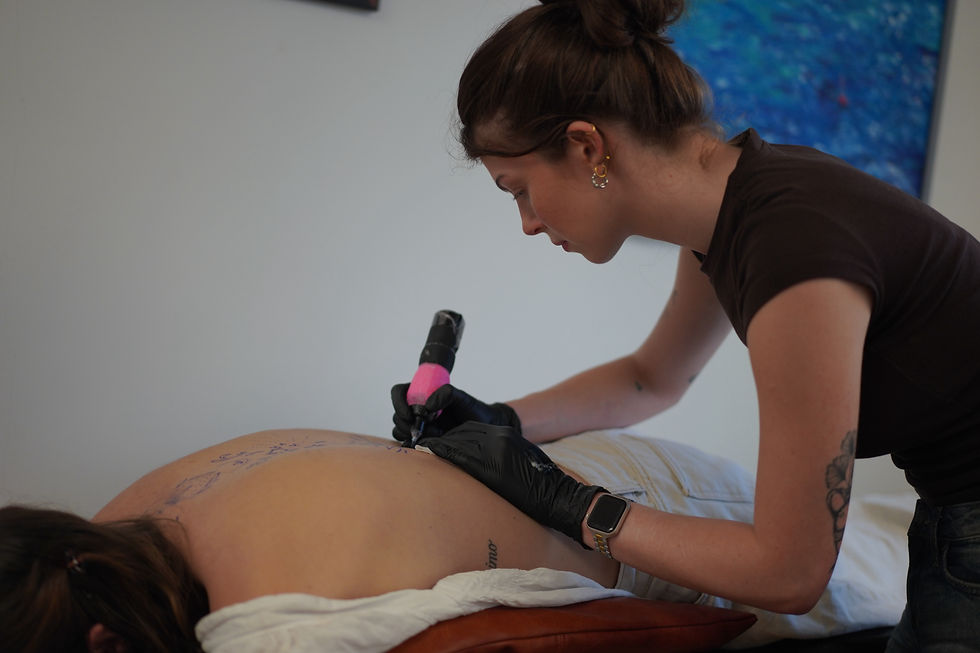
But there’s something people rarely talk about: the person who tattoos you shouldn’t be the same person who removes tattoos.
Laser removal is not just “another service.” It’s a medical-grade procedure that requires constant study, certified training, and years of experience to perform safely.
Here’s how to spot a dodgy laser operator — and why your tattoo artist and your laser technician should never be the same person.
Table of Contents

1. Tattooing and Laser Removal Are Two Different Professions
Tattooing and laser removal both involve skin — but that’s where the similarity ends.
A professional tattoo artist spends years mastering pigment application, healing, and design flow.
A qualified laser technician, on the other hand, studies light physics, skin biology, and medical protocols to safely remove pigment from the dermis.
Trying to master both is unrealistic — and unsafe.
A true expert in either field simply doesn’t have the time to keep up with both.
If your tattoo artist also offers “cheap laser sessions,” that’s your first red flag.
2. What a Real Laser Specialist Actually Does
A professional laser technician is trained to:
Identify pigment depth and colour composition.
Understand laser wavelengths and skin response.
Adjust pulse duration and fluence for safety.
Recognise and manage skin reactions immediately.
Work under medical guidance or alongside trained healthcare professionals.
At our tattoo shop, for instance, laser removal is handled by a qualified nurse using Lynton Lasers, one of the most respected medical-grade systems in Europe.
That’s because true laser specialists dedicate themselves entirely to one goal: safe, effective pigment removal without scarring.
3. Red Flags of a Dodgy Laser Removal Operator
If you see any of these warning signs, think twice before booking:
❌ The technician has no medical or laser training certificates.
❌ The machine brand is unknown, unlabelled, or purchased from eBay or Wish.
❌ They can’t tell you what wavelengths their machine uses.
❌ They operate from home or a tattoo shop back room without inspection.
❌ They promise “complete removal in one session.” (It’s impossible — and dangerous.)
❌ You’re told it won’t hurt at all. (A professional will always explain the realistic discomfort.)
These operators don’t just risk ruining your tattoo — they can permanently damage your skin.
4. Why Cheap Machines Cause Permanent Damage
Professional laser systems like Lynton Lasers use precisely calibrated light beams that target ink particles without overheating surrounding tissue.
Cheap, uncertified machines scatter energy unevenly, burning and rupturing skin cells.
This often results in:
Burns and blisters
Uneven pigment loss
Long-term scarring
Skin discolouration
The uniformity of the laser beam — how evenly it distributes light energy — is what determines whether your skin heals or scars.
That’s why quality equipment matters just as much as the person behind it.
5. How to Choose a Safe, Qualified Clinic
Before you book a tattoo removal session, ask:
✅ What brand and model of laser do you use?
✅ Are you trained or certified by the manufacturer?
✅ What medical background or supervision do you have?
✅ How many treatments do you estimate, and why?
✅ Do you offer patch tests before full sessions?
If they hesitate, avoid direct answers, or can’t show qualifications — walk away.
Your skin deserves more than a shortcut.
Conclusion
Laser tattoo removal is a medical-grade procedure — not a side hustle.
The same way a serious tattoo artist spends years refining their craft, a real laser professional spends years studying technology, safety, and the science of skin.
If someone claims to do both full-time, they’re probably cutting corners somewhere.
So do your research, ask questions, and remember:
A safe laser technician will always prioritise your skin’s health over a quick sale.
FAQs
Q: Can a tattoo artist also be a laser technician?
A: In theory, yes — but rarely to a safe professional standard. Both crafts require full-time dedication to stay up to date.
Q: What’s the biggest risk with cheap laser removal?
A: Burns, scarring, and uneven pigment removal caused by low-quality machines and untrained operators.
Q: Why is Lynton considered one of the best lasers?
A: Lynton Lasers are medical-grade systems designed and manufactured in the UK, with superior beam uniformity and precision.