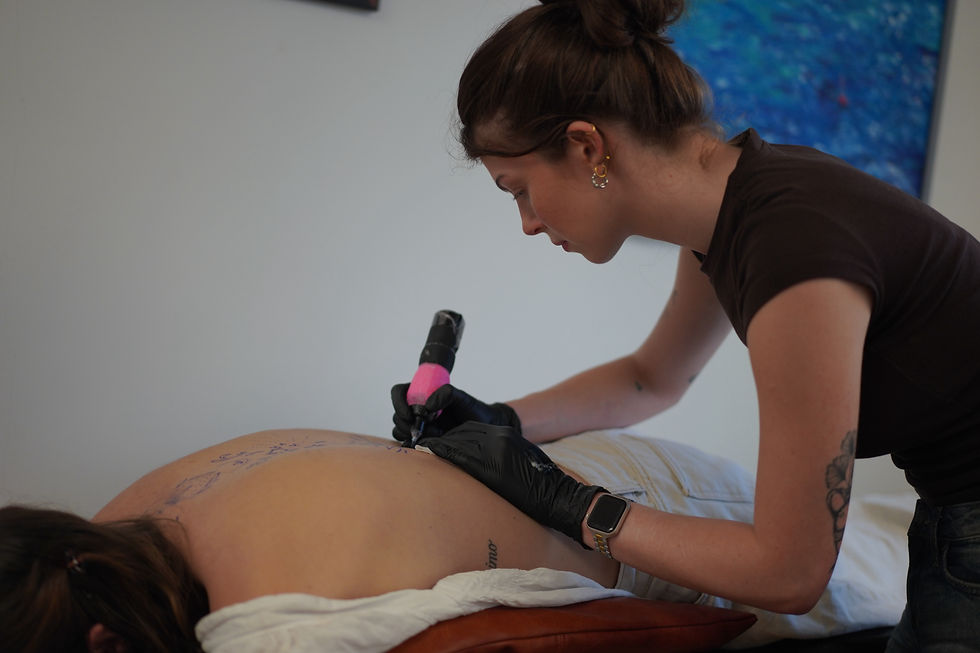
Why tattoo cover-ups are so hard
- Sep 20, 2025
- 2 min read
Updated: Sep 28, 2025

Introduction
When I thought about getting a tattoo cover-up, I assumed it was just drawing a new design over the old one. But then I discovered why so many cover-ups fail — and why they’re one of the hardest jobs in tattooing.
Here’s what I learned about why cover-ups are so tricky, and what makes the difference between a successful new tattoo and a bigger regret.
Table of Contents
1. Skin isn’t always the same after a tattoo
Tattooed skin can change. Sometimes it scars, sometimes it heals unevenly. That makes the tattooing process slower and harder, because the ink doesn’t go in the same way it does on fresh skin.
2. How bad laser removal can make it worse
If the old tattoo was treated with a cheap laser, the skin may already be damaged. Burns, pits, or uneven healing can make tattooing harder and less predictable.
3. Why “Overpowering” isn’t the same as covering
A lot of “cover-ups” don’t actually cover the old tattoo. They just try to overpower it with heavy, dark ink. The result? In time, both tattoos merge together, creating a bigger mess.
4. Why true cover-ups need fading first
The only way to get a reliable cover-up is to fade the old tattoo first. Dark-on-dark just doesn’t work long-term.
5. The science behind ink layers
Tattoo ink sits in the dermis, and when two layers of ink meet, they don’t stack — they mix. That’s why tattoos often “reappear” after 8–12 weeks if they weren’t faded properly first.
6. Final thoughts
Cover-ups are tough — but not impossible. With the right approach, patience, and sometimes a little laser help, you can turn an old mistake into something you’re proud of.
7. FAQs
Q: Why can’t I just put a darker tattoo on top?
Because inks mix in the dermis, making both tattoos visible over time.
Q: Does scar tissue affect cover-ups?
Yes — scarred skin takes ink differently and slows the process down.
Q: Why do some cover-ups look messy?
Usually because the old tattoo wasn’t faded enough first.